Services
Freesat vs Freeview: Dish or Aerial, and Which Is Better?
Freesat vs Freeview is a question about your roof rather than your television. Freesat carries around 170 free channels down a satellite dish; Freeview carries around 70 down an aerial. Neither costs anything beyond a TV Licence, both can record, and the right answer depends almost entirely on which of the two your property can actually receive well.
The short answer
- Freesat: satellite dish, around 170 channels, more of them in HD.
- Freeview: rooftop aerial, around 70 channels, already in most televisions.
- Both are free for life and both can record with the right box.
- Your reception decides it — a weak aerial is the main reason to choose Freesat.
Britain has run two free television platforms side by side for well over a decade, and most people only discover the second one when the first stops working properly. Freeview arrives down the aerial already on your roof and is built into essentially every television sold since the mid-2000s. Freesat arrives down a satellite dish, carries more channels, and is invisible to most households until an aerial starts letting them down.
Neither charges anything. There is no subscription, no contract and no account on either, and both are run by the public service broadcasters rather than by a commercial operator with an upsell. The only money involved is hardware, and on Freeview there is usually none at all because your television already has it.
That makes this an unusually clean comparison. You are not weighing packages or contract lengths — you are asking which delivery method works at your address, and what each one gives you once it does.
This page covers channel counts, the dish question, recording, reliability in bad weather, setup cost, and where the newer broadband platform fits alongside both.
What is the difference between Freesat and Freeview?
The delivery and the channel count. Freeview sends around 70 channels down a rooftop aerial; Freesat sends around 170 down a satellite dish, with more of them in HD. Both are free for life with no subscription, both need a TV Licence for live viewing, and both can record with the right box.
| Freesat | Freeview | |
|---|---|---|
| Arrives by | Satellite dish (Astra 28.2°E) | Rooftop aerial (DVB-T2) |
| Channels | ~170 | ~70 standard, ~15 HD |
| HD coverage | More channels in HD, higher bitrates | A subset in HD |
| Cost | Free — box from ~£70 | Free — usually already in the TV |
| Already built into your TV | Rarely | Almost certainly, since ~2016 |
| Recording | Yes, on recorder boxes | Yes, on recorder boxes |
| Catch-up in the guide | On newer boxes | Yes, via Freeview Play |
| Weak spot | Rain fade; needs a dish | Weak or ageing aerial |
| Premium channels | None — free-to-air only | None — free-to-air only |
| TV Licence | Required for live | Required for live |

Does Freesat have more channels than Freeview?
Yes, by a wide margin — roughly 170 against 70. Satellite capacity is simply greater than the terrestrial spectrum allows, so Freesat carries more channels overall, more of them in HD, and at higher bitrates. Put a satellite HD channel next to a struggling terrestrial one on a big set and the gap is obvious.
What both carry identically is the part most households actually watch. The full public service line-up — BBC One through to Parliament, CBBC and CBeebies; ITV1 and its sister channels; Channel 4, E4, More4, Film4; Channel 5 and its variants — is complete on either platform. Nobody is missing mainstream British television on Freeview.
The extra hundred channels on Freesat are mostly smaller commercial, international and specialist services. Plenty of households never miss them, but check the full list against anything you watch regularly before deciding. Channel count is a real advantage, but it is rarely the deciding one.
~170
Freesat channels
More of them in HD.
~70
Freeview channels
Around 15 in HD.
£0
Subscription, either
Free for life on both.
0
Premium sport
Neither carries Sky Sports.
Do you need a dish for Freesat?
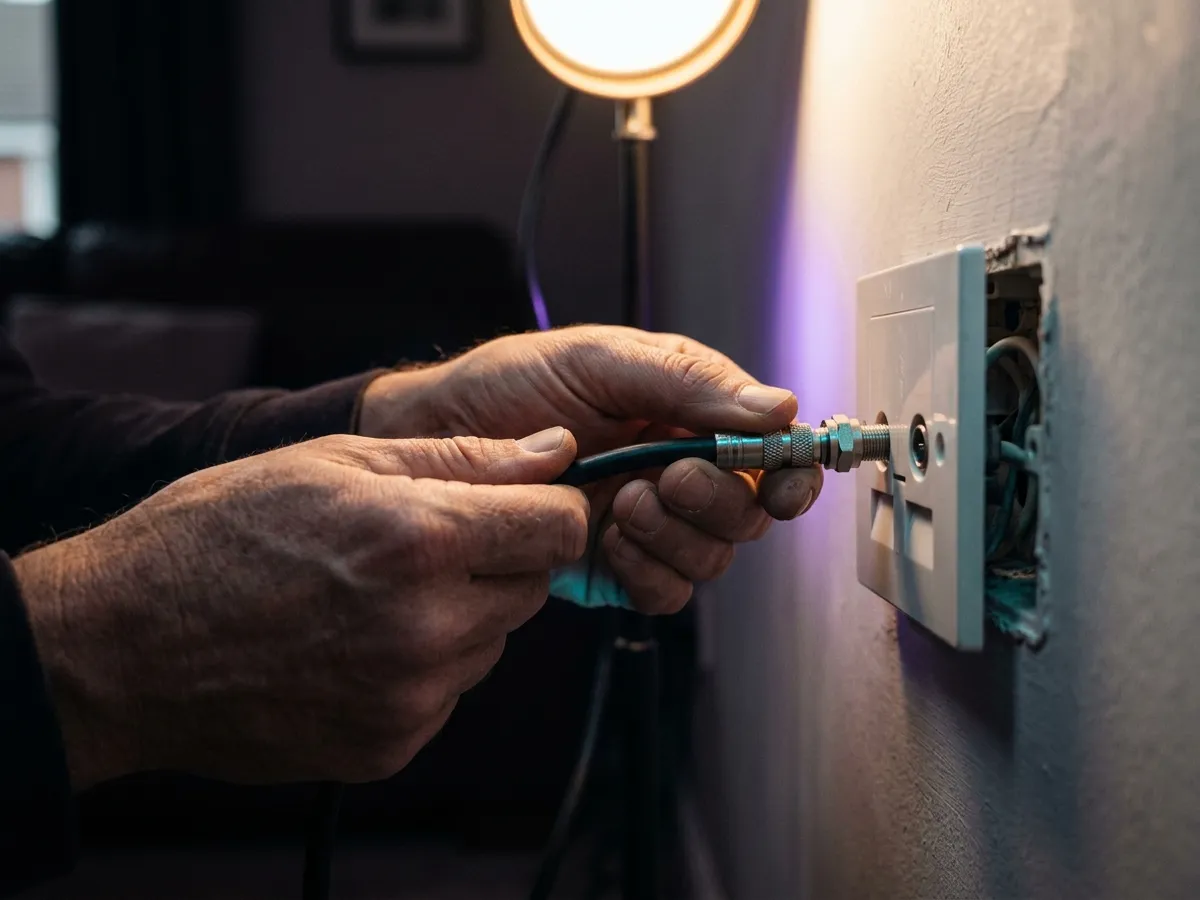
Yes. Freesat comes from the same satellites as Sky, at 28.2° east, so it needs a dish pointed there. Former Sky households usually already have everything required, because the dish stays pointed at the same satellite whether or not you are still paying Sky, and the cable running into the house does not change either.
Where there is no dish, one has to be installed, and this is where Freesat loses to Freeview for a large slice of the population. Renters usually cannot drill into an external wall. Flats frequently prohibit dishes in the lease. Listed buildings and conservation areas add planning constraints on top of all that.
Freeview asks nothing equivalent, provided a working aerial already exists. That is the practical asymmetry between the two: Freeview is usually free to start and Freesat sometimes is not, depending entirely on what is already attached to the building.
Can you record on Freesat and Freeview?
Both, with a recorder box — and between them they are now the cheapest route in Britain to a permanent copy you own. Almost every newer platform has given up on local storage: Sky’s current boxes keep a cloud list instead, and neither Freely nor Virgin Stream records anything.
The rule that matters when buying one is the same on both platforms: tuner count decides what a recorder can actually do, and manufacturers advertise storage instead because hours are an easier number to print. One tuner means the television is tied to whatever is recording, and that is rarely what anyone wants.
The trade on either platform is that recordings are encrypted to the box that made them. Nothing can be copied off to another device, so the library lives and dies with that particular box. Our guide to Freeview and Freesat recorders covers which models still exist and why tuners matter more than disk size.
Which is more reliable, Freesat or Freeview?
They fail in different weather. Freesat is immune to terrestrial reception problems entirely — no transmitter distance, no ageing aerial, no interference from a neighbour’s extension. But very heavy rain or snow can briefly degrade a satellite signal, which an aerial generally shrugs off.
In British weather, rain fade amounts to a handful of minutes a year for most households. Against that, a marginal aerial is a permanent condition rather than an occasional one: it pixelates on windy evenings, drops channels after transmitter work, and degrades slowly as the aerial corrodes. One is an annoyance; the other is a recurring fault.
Both share one genuine advantage over every broadband platform: neither cares how many other people are watching. A Freesat or Freeview channel looks identical during a cup final and on a Tuesday afternoon, because there is no shared capacity to congest. That is not true of Freely or any streaming service.
How much does Freesat cost to set up compared with Freeview?
Freeview usually costs nothing, because it is already in your television. Freesat needs a box from around £70, and a dish if the property has none — which is the one genuine setup cost in free British television. With an existing Sky dish, a box alone is the whole expense.
| Your property | Freesat cost | Freeview cost |
|---|---|---|
| TV from ~2016, working aerial | Box from ~£70, plus a dish if none | Nothing — already built in |
| Existing Sky dish, no longer subscribing | Box only, from ~£70 | Nothing, if the aerial works |
| No dish, no aerial | Box plus dish installation | Not available |
| Older TV, no built-in platform | Box from ~£70 | Set-top box from ~£30 |
| You want to record | Recorder box | Recorder box |
Over any reasonable period both are extraordinarily cheap television. A one-off box and then nothing compares well against a monthly bill that keeps rising, which is worth remembering before assuming free platforms are a compromise.
The one thing money does not buy on either platform is a modern interface. Both are functional rather than polished: newer Freesat boxes offer a scroll-back guide and the main catch-up apps, and Freeview Play folds iPlayer, ITVX, Channel 4 and My5 into its guide, but neither matches what Freely does with a backwards-scrolling schedule. If the interface matters more to you than the channel count, that is worth weighing before choosing between these two at all.
On an older box the apps in particular will feel slow, and there is a cheap fix that applies to both platforms equally. A streaming stick on a second HDMI input handles the on-demand side properly for around £40, and leaves the tuner doing what it is genuinely best at: live channels and recordings.
Where does Freely fit alongside Freesat and Freeview?
Freely is the third free platform and the newest, delivering live channels over broadband with no aerial and no dish. It exists for the households neither of the others can reach — flats with no aerial socket, rentals where nothing can be fitted, and buildings where a dish is not permitted.
It carries fewer channels than either Freesat or Freeview and cannot record at all, so it is not an upgrade to them so much as a different answer to the same question. What it does have is the best guide in free British television, which scrolls backwards into programmes that have already aired.
| Freesat | Freeview | Freely | |
|---|---|---|---|
| Arrives by | Dish | Aerial | Broadband |
| Channels | ~170 | ~70 | Fewer |
| Recording | Yes | Yes | No |
| Works in a broadband outage | Yes | Yes | No |
| Needs anything on the roof | A dish | An aerial | Nothing |
| Best for | Poor terrestrial reception | A working aerial | No aerial at all |
Our Freely vs Freeview comparison works through that second pairing in detail, and the Freely review covers the platform on its own.
Freesat or Freeview: which should you choose?
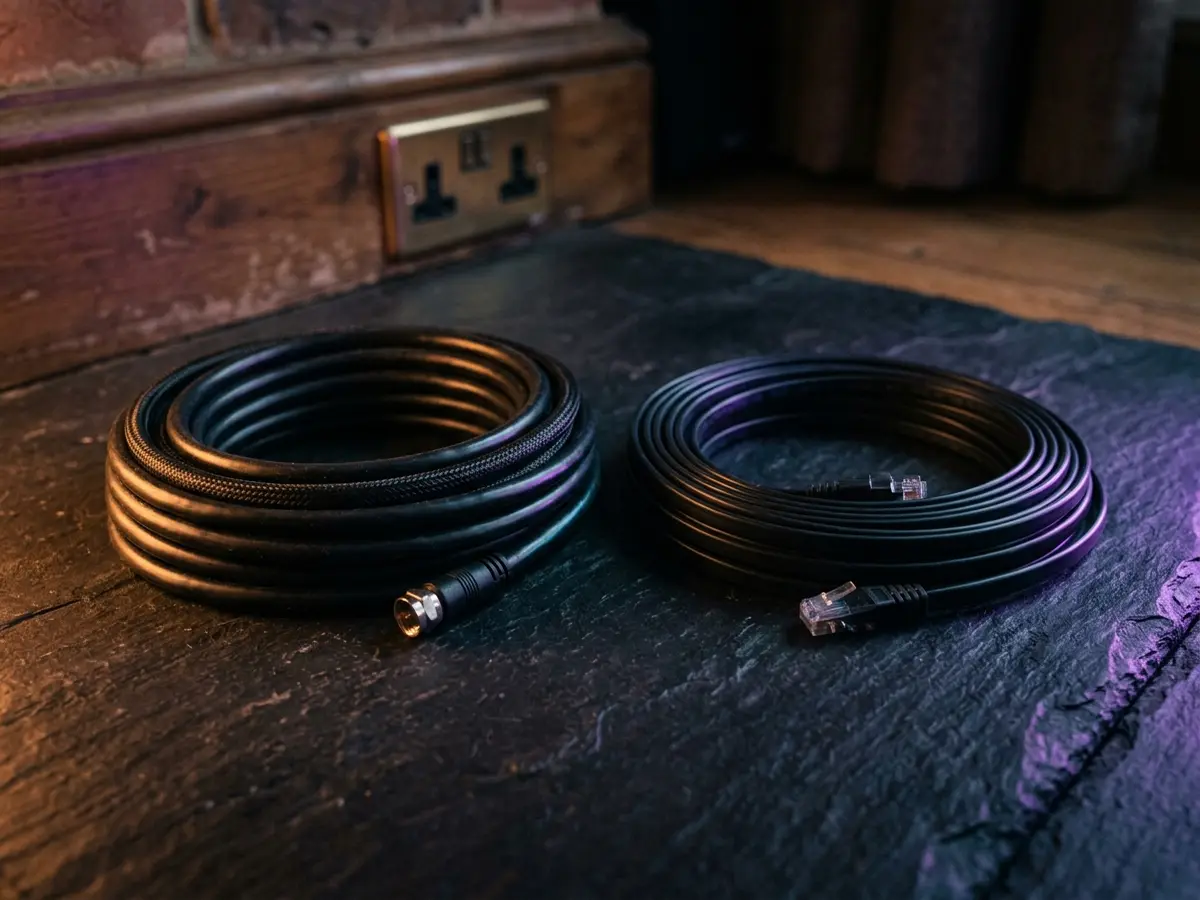
Take Freeview if your aerial works, because it is already in your television and costs nothing. Take Freesat if reception is poor and a dish is possible, or if the extra hundred channels and better HD coverage genuinely matter to you. If neither is possible, Freely over broadband is the answer.
| Your situation | Choose | Why |
|---|---|---|
| Working rooftop aerial, TV from 2016 or later | Freeview | Already built in, nothing to buy, nothing to install. |
| Picture breaks up regularly, new aerial did not fix it | Freesat | A dish does not care about transmitter distance or obstructions. |
| Rural, poor terrestrial signal, can fit a dish | Freesat | This is precisely the reception problem satellite solves. |
| You already have a Sky dish and stopped subscribing | Freesat | The dish and cable already work. A box is the only cost. |
| You want the most channels for nothing | Freesat | Around 170 against 70, with more of them in HD. |
| Renting, or a flat where a dish is not permitted | Freeview, or Freely | A dish is not an option. Use the aerial if there is one. |
| No aerial and no dish possible | Freely | Broadband delivery is the only remaining free route. |
| You record heavily | Either, with a recorder | Both support recording. Tuner count decides what it can do. |
For the platforms individually, our Freesat review and Freeview Play review cover setup, channel lists and the faults that come up most on each.
What the channels neither platform carries actually cost
Everything above is free, and for a great many households that settles the question entirely. What neither Freesat nor Freeview carries is Sky Sports, Sky Atlantic, TNT Sports or Premier League football — which is what keeps most paid subscriptions alive in Britain.
IPTV 4K Ultra
From £2.86/moCinema-quality HDR & Dolby
True 4K Ultra HD streaming with HDR10+, Dolby Vision and Dolby Atmos. Watch the Premier League in 4K like you are at the ground.
Starter 4K
3 Months
£34.99−31%
£23.99
£8.00/mo
- 27,000+ channels in 4K
- 192,000+ VOD titles in native 4K
- 4K UHD (3840×2160) HEVC
- Full EPG guide
- 1 screen
- 24/7 UK support
- Anti-freeze technology
Secure payment

Standard 4K
6 Months
£54.99−27%
£39.99
£6.67/mo
- 27,000+ channels in 4K
- 192,000+ VOD titles in 4K HDR
- 4K UHD + HDR10+
- EPG + 3-day replay
- 1 screen
- Priority support 24/7
- Anti-freeze servers
Secure payment
Premium 4K
12 Months
2 months free£74.99−27%
£54.99
£3.93/mo
- 27,000+ channels in 4K UHD
- 192,000+ VOD titles in 4K HDR
- 4K UHD + HDR10+ + Dolby Vision
- EPG + 7-day replay
- 1 screen
- VIP WhatsApp support
- Dolby Atmos 5.1 audio
- Free automatic updates
Secure payment
Ultimate 4K
24 Months
4 months free£89.99−11%
£79.99
£2.86/mo
- 27,000+ channels in 4K UHD
- 192,000+ VOD titles in 4K Ultra HD
- 4K + HDR10+ + Dolby Vision
- EPG + 14-day replay
- 1 screen
- VIP WhatsApp instant support
- Dolby Atmos 7.1 surround
- Early access to 4K content
- Optimised HEVC streaming
Secure payment
IPTV 8K Ultra Max
From £3.93/mo8K HDR + Dolby Atmos — the pinnacle
The most advanced plan on the list. True 8K Ultra HD with Dolby Vision HDR and Dolby Atmos sound, 55,000+ live channels, 220,000+ on-demand films and series, and multi-language subtitles on everything.
Starter 8K
3 Months
£39.99−25%
£29.99
£10.00/mo
- 55,000+ live channels in up to 8K
- 220,000+ films & series on demand
- 8K UHD + Dolby Vision HDR
- Dolby Atmos immersive audio
- Multi-language subtitles
- Full EPG guide
- 1 screen
- 24/7 UK support
Secure payment
Standard 8K
6 Months
£69.99−29%
£49.99
£8.33/mo
- 55,000+ live channels in up to 8K
- 220,000+ films & series on demand
- 8K UHD + Dolby Vision HDR
- Dolby Atmos immersive audio
- Multi-language subtitles
- EPG + 3-day replay
- 1 screen
- Priority UK support 24/7
Secure payment
Premium 8K
12 Months
2 months free£99.99−30%
£69.99
£5.00/mo
- 55,000+ live channels in up to 8K
- 220,000+ films & series in 8K / 4K
- 8K UHD + Dolby Vision HDR
- Dolby Atmos object-based audio
- Multi-language subtitles throughout
- EPG + 7-day replay
- 1 screen
- VIP WhatsApp support 24/7
- Free automatic updates
Secure payment
Ultimate 8K
24 Months
4 months free£124.99−12%
£109.99
£3.93/mo
- 55,000+ live channels in up to 8K
- 220,000+ films & series in 8K / 4K
- 8K UHD + Dolby Vision HDR
- Dolby Atmos 7.1+ surround sound
- Multi-language subtitles throughout
- EPG + 14-day replay
- 1 screen
- VIP WhatsApp instant support
- Early access to new 8K content
- Optimised 8K HEVC / AV1 streaming
Secure payment
Whichever of the two sits on your roof, the paid side only has to cover what free-to-air does not: 4K Ultra brings the live channels in 4K HDR, and 8K Ultra Max widens the list again. Every plan is on the pricing page.
Frequently asked questions
Is Freesat better than Freeview?
It carries more channels — around 170 against 70 — and more of them in HD. But Freeview is already built into almost every television and needs no new hardware, so it is the better choice wherever the aerial works properly.
What is the difference between Freesat and Freeview?
The delivery. Freesat arrives down a satellite dish, Freeview down a rooftop aerial. Both are free for life with no subscription, both need a TV Licence for live viewing, and both can record with the right box.
Do I need a dish for Freesat?
Yes, pointed at Astra 28.2°E — the same satellites Sky uses. That is why a dish left behind by an old Sky subscription normally works for Freesat without anyone touching it.
Can I get Freesat without a dish?
No. Freesat is a satellite platform and the dish is how the signal arrives. For a property where no dish can be fitted, Freely delivers live British channels over broadband instead, with no aerial and no dish at all.
Does Freesat have better picture quality than Freeview?
On HD channels, generally yes — satellite capacity allows more channels in HD and at higher bitrates. The bigger practical difference is that Freesat is unaffected by a weak aerial, which is what degrades most Freeview pictures.
Which records better, Freesat or Freeview?
Neither, in any way that matters — both write to a hard disk in the box and both lock recordings to that box. The real difference is what you can record from: around 170 channels on Freesat against around 70 on Freeview. Pick the platform your roof receives best, then the recorder.
Is Freesat affected by bad weather?
A little. A downpour or heavy snow can interrupt a satellite picture for a few minutes — engineers call it rain fade — which in a typical British year adds up to very little. A weak aerial, by comparison, causes trouble all year round.
Does Freesat cost anything each month?
No. There is no subscription, no contract and no account fee on Freesat or Freeview. The only costs are hardware — a box from around £70, plus a dish if the property has none — and the TV Licence for live viewing.
Can you watch Premier League football on Freesat or Freeview?
No. Neither carries Premier League football, Sky Sports or TNT Sports, and no free UK platform does. Live football requires a paid subscription — a NOW Sports Membership taken only during the season is usually the cheapest legal route.
Can I have both Freesat and Freeview?
Yes, and it costs nothing extra beyond the hardware if your property has both a dish and an aerial. They use different inputs, and having both covers the failure modes of each.
Do I need a TV Licence for Freesat or Freeview?
Yes, for either, if you watch live television or use BBC iPlayer. Paying nothing for the platform makes no difference — the licence is about how you watch, not what you watch on.
Which is best for a rented flat?
Freeview if there is a working aerial socket. A dish usually cannot be fitted to a rental, and if there is no aerial either, Freely over broadband is the only free route to live British channels.
This page is part of our Services hub.
See all services guides