Services
Freely vs Freeview: Which Free UK TV Platform Should You Use?
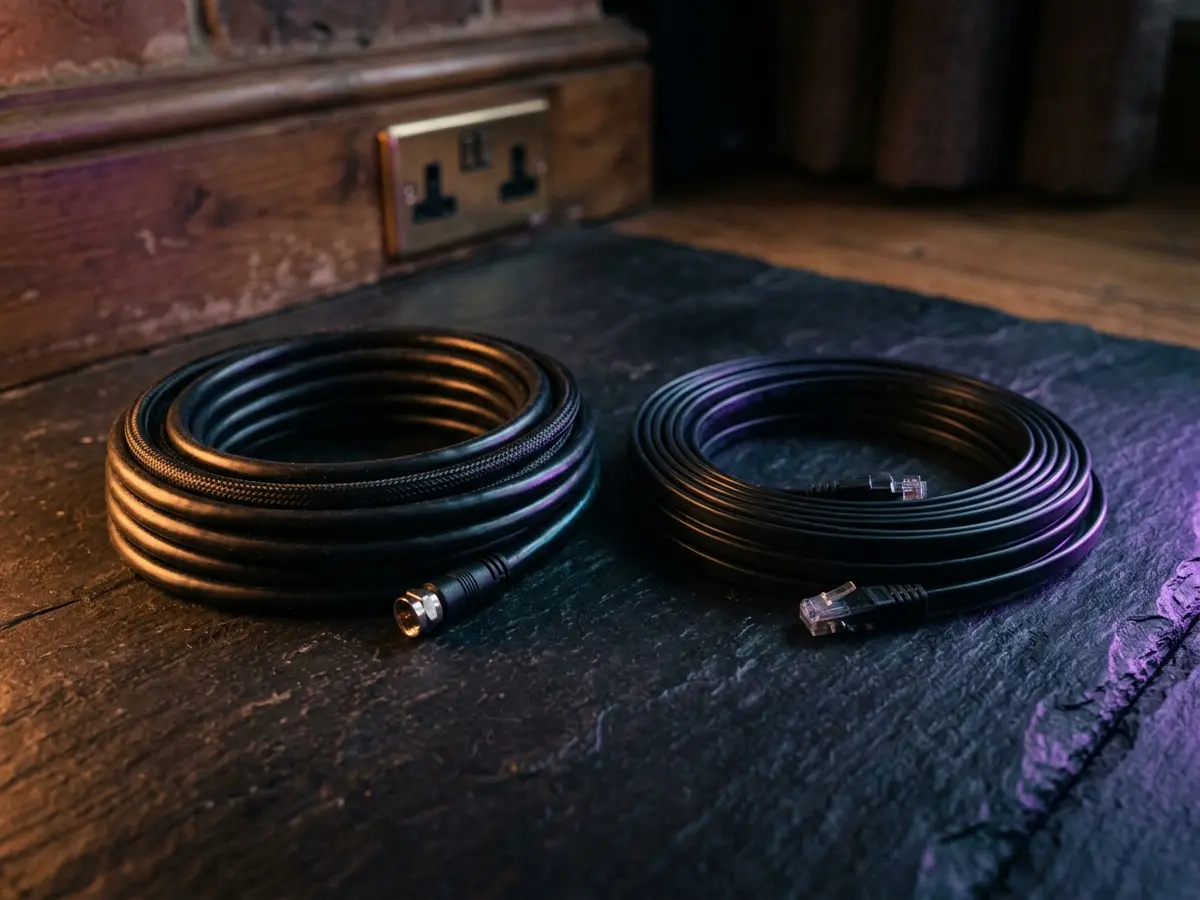
Freely vs Freeview is not a contest between two rival companies. Both are run by Everyone TV — the BBC, ITV, Channel 4 and Channel 5 jointly — and both are free for life with no subscription. The difference is entirely in how the live channels reach your television: Freeview down an aerial cable, Freely down your broadband. Almost every practical consequence follows from that one choice of pipe.
The short answer
- Same owner, same public service channels, no subscription on either.
- Freeview needs a working aerial. Freely needs working broadband.
- Freeview carries more channels and can record. Freely cannot record at all.
- A TV Licence is required for live viewing on both, exactly as on any broadcast.
Two free television platforms now exist in Britain, they are owned by the same organisation, they carry very largely the same channels, and they have confusingly similar names. It is not surprising that people arrive at this comparison unsure whether Freely is a replacement for Freeview, an upgrade to it, or an entirely separate thing they are being asked to pay for.
The short version: it is a second route into the same television. Freeview has delivered live channels down an aerial cable since 2002, with Freeview Play adding broadband catch-up on top since 2015. Freely, launched in April 2024, delivers those same live channels over broadband instead — which for the first time lets a flat with no aerial socket watch BBC One at the moment it airs.
Neither costs anything. Neither has a contract. The decision is therefore not about money at all, which makes it unusual in British television, and it comes down to three things about your property: whether you have a working aerial, how reliable your broadband is, and whether you still want to record programmes to a disk you own.
This page sets the two side by side on each of those, then gives the decision as a table you can match your own situation against.
What is the difference between Freely and Freeview?
Only the delivery. Freeview sends live channels down an aerial cable; Freely sends the same channels over your broadband connection. Both are run by Everyone TV, both are free with no subscription and no contract, and both require a TV Licence for live viewing. Everything else in this comparison descends from that single difference.
| Freely | Freeview Play | |
|---|---|---|
| Launched | April 2024 | 2015 (Freeview since 2002) |
| Operated by | Everyone TV | Everyone TV |
| Cost | Free, no subscription | Free, no subscription |
| Live channels arrive via | Broadband | Aerial (DVB-T2) |
| Catch-up arrives via | Broadband | Broadband |
| Aerial required | No | Yes |
| Channels | Fewer — the main line-up | ~70 standard, ~15 HD |
| Recording | None | Yes, on recorder boxes |
| Guide scroll-back | Yes, integrated | 7 days |
| Works in a broadband outage | No | Yes, for live channels |
| TV Licence | Required for live | Required for live |
Do you need an aerial for Freely?
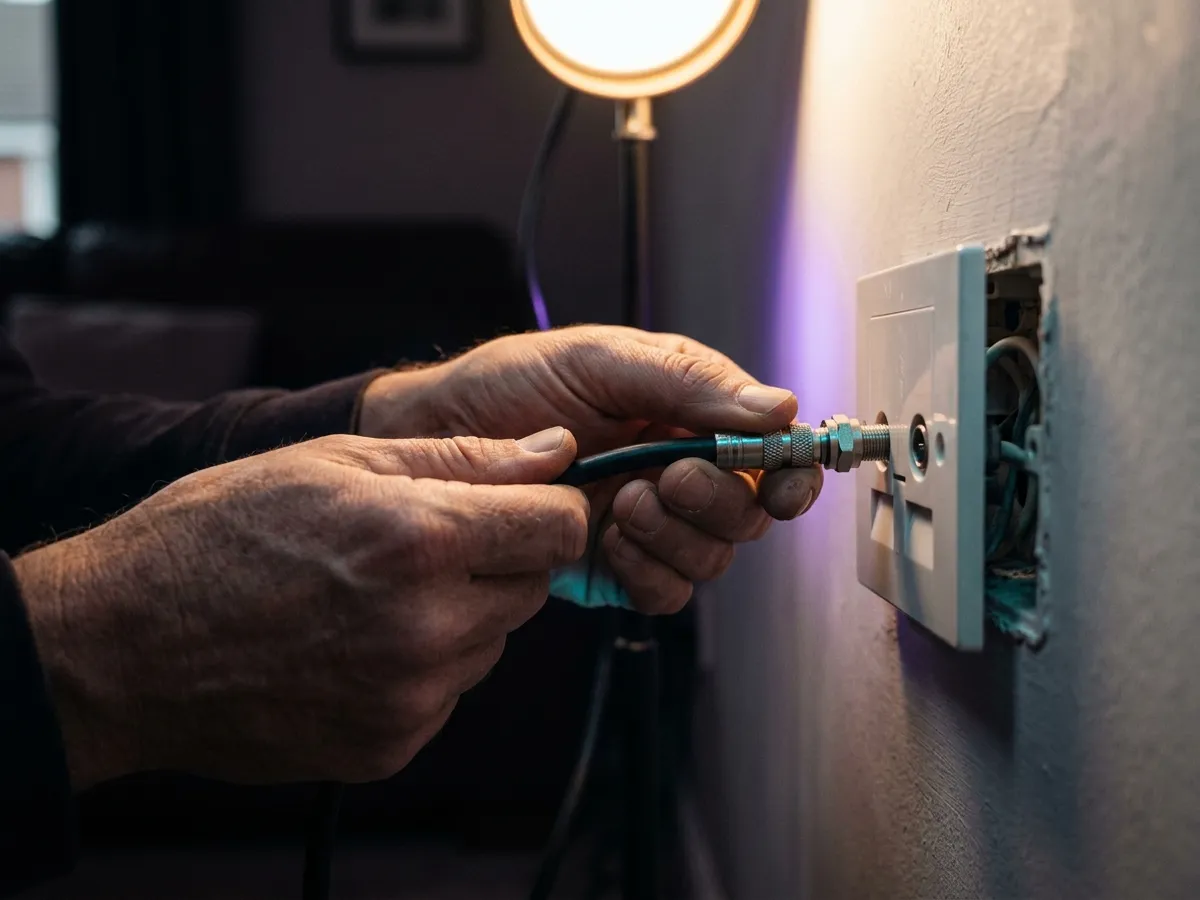
No — that is the entire reason the platform exists. Freely carries live channels over broadband, so a property with no aerial socket at all can still watch BBC One, ITV1 and Channel 4 live. Some hybrid televisions will use an aerial as well when one is connected, but none of them require it.
This matters more than it sounds, because a large and growing share of British housing has no usable aerial. New-build flats frequently ship without a socket in every room. Rental agreements routinely forbid drilling into external walls. Conservation areas and listed buildings add planning constraints on top. For all of those households, Freeview was simply unavailable, and the only route to live British television was a paid subscription.
Freely closed that gap. If you are in a flat with a bare wall and a broadband socket, this is the platform that works, and the practicalities of adding it to an older television are covered in our guide to the Freely TV box.
How many channels do Freely and Freeview have?
Freeview carries more. A full aerial line-up runs to roughly 70 standard-definition channels with around 15 in HD, while a broadband-only Freely setup carries the main public service line-up but not every smaller Freeview channel. If channel count is your priority and you have an aerial, Freeview wins on this point.
What both carry identically is the part most households actually watch: the full public service line-up. Every BBC channel including the children’s ones, the ITV family, Channel 4 with E4, More4 and Film4, and Channel 5 with its offshoots. On either platform, that is the core of British television and it is complete.
The channels that differ are the smaller commercial and shopping channels further down the Freeview list. Whether their absence matters is a personal question, and for most households the honest answer is that it does not — but it is worth checking the current line-up against anything you watch regularly before switching a household over, since both lists move.
Neither carries any paid-for channels at all — so no Sky or TNT sport and no live Premier League. Both are free-to-air only. If live sport is what keeps a paid subscription alive in your house, our comparison of every UK service sets out what the licensed routes to it cost.
Can you record on Freely or Freeview?
Only on Freeview, and only with a recorder box. Freely stores nothing at all — there is no disk in the box and no cloud list either — so catch-up is the only way back to a programme. For the public service channels that catch-up is comprehensive, but it is not total, and programmes do leave when rights expire.
A Freeview or Freesat recorder still writes a physical copy to a disk in your house, which is now genuinely unusual. Sky removed the hard disk from Sky Stream and Sky Glass in favour of a cloud Playlist that can lose titles. Virgin Stream has no recording. Freely has none. On a shrinking list of platforms that still own their recordings outright, a Freeview recorder is the cheapest entry.
The trade is that those recordings are encrypted to the box that made them. They cannot be moved to another device, so a failed recorder takes the library with it. That is a real limitation, but it is still the only route in free British television to a permanent copy you control.
Which has the better TV guide?
Freely, clearly. Its guide scrolls backwards as well as forwards, so a programme that aired two days ago sits in the grid where it was broadcast and plays from there. Freeview Play offers seven-day scroll-back, but the integration is looser — catch-up feels bolted beside the guide rather than folded into it.
That difference is the single best thing about Freely and the reason it is worth having even in a house that already has a working aerial. You stop thinking about whether something is "on now" or "on iPlayer" and simply scroll to it. It is the closest free British television has come to the experience Sky charges for.
It is not flawless. Programmes whose catch-up rights have run out leave gaps in the backwards grid, and nothing plays from a service until you have logged into it. Neither is a fault of the platform so much as a consequence of how catch-up rights work in Britain.
What happens when the broadband goes down?
Freely stops completely; Freeview keeps working. This is the most important practical difference between them and the one people most often fail to think about before switching. Aerial reception has nothing to do with the router, so live channels carry on when the broadband drops.
On Freely there is no fallback. The broadband is the aerial, so an outage means no television at all rather than degraded television. In a household where the line drops regularly, or where an evening without any channels is genuinely inconvenient, that is a fair argument for keeping an aerial connected even if Freely is what you use day to day.
The reverse failure is worth naming too, because it is the one Freely handles better. Freeview reception degrades with weather, transmitter work and a slowly corroding aerial, and it does so gradually — pixelation on a windy evening, then a channel that will not tune. Freely is immune to all of that. The two platforms fail in opposite circumstances, which is precisely why a house with both is unusually resilient.
~10
Mbps for Freely
Per stream — a low bar by modern standards.
0
Mbps for Freeview live
The aerial does the work.
£0
Cost of either
No subscription on either platform.
2
Platforms, one house
Keeping both costs nothing extra.
Which televisions have Freely, and which have Freeview Play?
Freeview Play is built into the overwhelming majority of televisions sold in Britain since about 2015, so if your set is that age or newer it almost certainly has it already. Freely is much newer and appears only on sets from 2024 onwards — Hisense, TCL, Bush, Toshiba, Panasonic and Sharp among them, plus Fire TV OS televisions. LG has ruled it out entirely.
If your television predates 2024, Freely cannot be added as an app. This is the single most common disappointment we hear about the platform: it is a television platform rather than a piece of software, so there is no version for a Fire TV Stick, a Roku or an older smart TV. A television either arrived with Freely or it did not, and no amount of installing will change which.
The way round that is a standalone box. Humax and Netgem both make one, they plug into any spare HDMI port, and they cost a one-off payment with nothing afterwards. Our Freely box guide compares the two and covers setting one up.
Televisions from 2024 onwards
- Built into new sets from Hisense, TCL, Bush, Panasonic and others — never LG.
- Cannot be installed on a Fire TV Stick, a Roku or an older smart TV.
- A Humax or Netgem box adds it to any television with HDMI.
- No subscription and no account fee, ever.
Almost any television since 2015
- Already present in the vast majority of British televisions.
- Needs a working aerial for the live channels.
- Recorder boxes add a hard disk you own outright.
- Also carried on Freeview set-top boxes for older sets.
Do you need a TV Licence for Freely or Freeview?
Yes, for both, if you watch live. A TV Licence is required to watch or record any channel as it is being broadcast, whatever the platform and whatever it cost — and it is required to use BBC iPlayer at all, live or on demand. Being free-to-air does not exempt either platform.
This catches people out because both platforms are free, and free is easily heard as "no licence needed". The licence is not a subscription to a platform; it is a requirement attached to live broadcast viewing itself. A Freely box or a Freeview aerial still carries live channels, so it still needs one.
Where a licence genuinely is not required is a household that watches only on-demand content and never opens iPlayer. That is a narrower position than most people assume — the licence-free rules, service by service are worth reading before relying on it.

Freely or Freeview: which should you choose?
Your property decides it rather than your preferences. No aerial means Freely. A working aerial plus a wish to record means Freeview. Unreliable broadband means Freeview. And if you have both an aerial and good broadband, run both — they cost nothing and they fail in opposite circumstances.
| Your situation | Choose | Why |
|---|---|---|
| Flat or rental with no aerial socket | Freely | The only free route to live British channels. This is precisely what the platform was built for. |
| Working rooftop aerial, television from 2015 or later | Freeview Play | Already in the set, more channels, and it survives a broadband outage. |
| You record programmes regularly | Freeview Play | Freely cannot record at all, and no update will change that. A recorder box needs an aerial. |
| Broadband is slow or drops often | Freeview Play | The aerial keeps working when the line does not. Freely has no fallback. |
| Poor terrestrial reception but good broadband | Freely | A struggling aerial pixelates; broadband delivery does not care about the transmitter. |
| You want the best guide in free British TV | Freely | The backwards-scrolling guide is genuinely better, and worth having even alongside an aerial. |
| Poor reception and no broadband to speak of | Neither — consider Freesat | A dish sidesteps both problems. Freesat carries around 170 channels with no internet involved. |
| You have an aerial and decent broadband | Both | They cost nothing and cover each other’s failure modes entirely. |
For the fuller picture on each, our Freely review and Freeview Play review cover the platforms individually, including setup and the faults that come up most.
What the same channels cost once sport is added
Everything above is free, and for a great many households that is the whole answer. The question that remains is sport, because neither Freely nor Freeview carries Sky Sports, TNT Sports or Premier League football, and that is what keeps most paid subscriptions alive in Britain.
IPTV 4K Ultra
From £2.86/moCinema-quality HDR & Dolby
True 4K Ultra HD streaming with HDR10+, Dolby Vision and Dolby Atmos. Watch the Premier League in 4K like you are at the ground.
Starter 4K
3 Months
£34.99−31%
£23.99
£8.00/mo
- 27,000+ channels in 4K
- 192,000+ VOD titles in native 4K
- 4K UHD (3840×2160) HEVC
- Full EPG guide
- 1 screen
- 24/7 UK support
- Anti-freeze technology
Secure payment

Standard 4K
6 Months
£54.99−27%
£39.99
£6.67/mo
- 27,000+ channels in 4K
- 192,000+ VOD titles in 4K HDR
- 4K UHD + HDR10+
- EPG + 3-day replay
- 1 screen
- Priority support 24/7
- Anti-freeze servers
Secure payment
Premium 4K
12 Months
2 months free£74.99−27%
£54.99
£3.93/mo
- 27,000+ channels in 4K UHD
- 192,000+ VOD titles in 4K HDR
- 4K UHD + HDR10+ + Dolby Vision
- EPG + 7-day replay
- 1 screen
- VIP WhatsApp support
- Dolby Atmos 5.1 audio
- Free automatic updates
Secure payment
Ultimate 4K
24 Months
4 months free£89.99−11%
£79.99
£2.86/mo
- 27,000+ channels in 4K UHD
- 192,000+ VOD titles in 4K Ultra HD
- 4K + HDR10+ + Dolby Vision
- EPG + 14-day replay
- 1 screen
- VIP WhatsApp instant support
- Dolby Atmos 7.1 surround
- Early access to 4K content
- Optimised HEVC streaming
Secure payment
IPTV 8K Ultra Max
From £3.93/mo8K HDR + Dolby Atmos — the pinnacle
The most advanced plan on the list. True 8K Ultra HD with Dolby Vision HDR and Dolby Atmos sound, 55,000+ live channels, 220,000+ on-demand films and series, and multi-language subtitles on everything.
Starter 8K
3 Months
£39.99−25%
£29.99
£10.00/mo
- 55,000+ live channels in up to 8K
- 220,000+ films & series on demand
- 8K UHD + Dolby Vision HDR
- Dolby Atmos immersive audio
- Multi-language subtitles
- Full EPG guide
- 1 screen
- 24/7 UK support
Secure payment
Standard 8K
6 Months
£69.99−29%
£49.99
£8.33/mo
- 55,000+ live channels in up to 8K
- 220,000+ films & series on demand
- 8K UHD + Dolby Vision HDR
- Dolby Atmos immersive audio
- Multi-language subtitles
- EPG + 3-day replay
- 1 screen
- Priority UK support 24/7
Secure payment
Premium 8K
12 Months
2 months free£99.99−30%
£69.99
£5.00/mo
- 55,000+ live channels in up to 8K
- 220,000+ films & series in 8K / 4K
- 8K UHD + Dolby Vision HDR
- Dolby Atmos object-based audio
- Multi-language subtitles throughout
- EPG + 7-day replay
- 1 screen
- VIP WhatsApp support 24/7
- Free automatic updates
Secure payment
Ultimate 8K
24 Months
4 months free£124.99−12%
£109.99
£3.93/mo
- 55,000+ live channels in up to 8K
- 220,000+ films & series in 8K / 4K
- 8K UHD + Dolby Vision HDR
- Dolby Atmos 7.1+ surround sound
- Multi-language subtitles throughout
- EPG + 14-day replay
- 1 screen
- VIP WhatsApp instant support
- Early access to new 8K content
- Optimised 8K HEVC / AV1 streaming
Secure payment
Two tiers appear because the free platform already takes care of BBC, ITV and the rest, leaving only sport to pay for — 4K Ultra delivers the live line-up in 4K HDR and 8K Ultra Max goes further. Every plan is on the pricing page.
Frequently asked questions
Is Freely replacing Freeview?
No. Everyone TV runs both deliberately, and the aerial network is not being switched off as part of the Freely launch. Freely exists to reach households an aerial cannot — new flats, rentals and buildings where an aerial is not permitted.
Is Freely better than Freeview?
Neither is better overall. Freely has the better guide and needs no aerial; Freeview carries more channels, can record, and keeps working during a broadband outage. Your property decides which suits you.
Can I have both Freely and Freeview?
Yes, and it is a good idea if you have both an aerial and reliable broadband. Neither costs anything, and because they fail in opposite circumstances a house with both very rarely loses television altogether.
Does Freely work without an aerial?
Yes. Freely carries live channels over broadband, so a property with no aerial socket at all can still watch BBC One, ITV1 and Channel 4 live. That is the reason the platform exists.
Does Freely have more channels than Freeview?
No, fewer. A full Freeview aerial line-up runs to roughly 70 channels; a broadband-only Freely setup carries the main public service line-up but not every smaller Freeview channel.
Which records, Freely or Freeview?
Freeview, with a recorder box. Freely has no recording at all — no hard disk and no cloud equivalent — so if keeping programmes matters you need an aerial and a Freeview recorder. No update will change that: the platform has no local storage by design.
Do I need a TV Licence for Freely?
Yes, if you watch live television on it or use BBC iPlayer at all. The licence attaches to live broadcast viewing rather than to a platform, so a free platform still requires one.
Can I add Freely to my Fire TV Stick?
No. Freely is built into a television’s operating system rather than distributed as software, which is why no Fire TV Stick, Roku or older smart TV can run it. A Humax or Netgem Freely box adds it to any set with a spare HDMI port.
How much broadband does Freely need?
Around 10 Mbps per stream, which is a low bar by modern standards and well under what a 4K subscription platform wants. Line stability matters more than headline speed.
What happens to Freely if my internet goes down?
It stops entirely — there is no aerial fallback, so an outage means no television rather than degraded television. Freeview keeps working through a broadband outage because the aerial is doing the work.
Is Freely free forever, or is there a catch?
It is genuinely free with no subscription, no contract and no account fee. It is funded the same way Freeview is, by the public service broadcasters who jointly own Everyone TV. A TV Licence is still required for live viewing.
Which is better for poor TV reception, Freely or Freeview?
Freely, provided the broadband is sound. A weak aerial signal pixelates and drops channels, whereas broadband delivery does not depend on line of sight to a transmitter at all. If broadband is also poor, Freesat is the better answer.
This page is part of our Services hub.
See all services guides